From Live Experience to Integrated Amplification
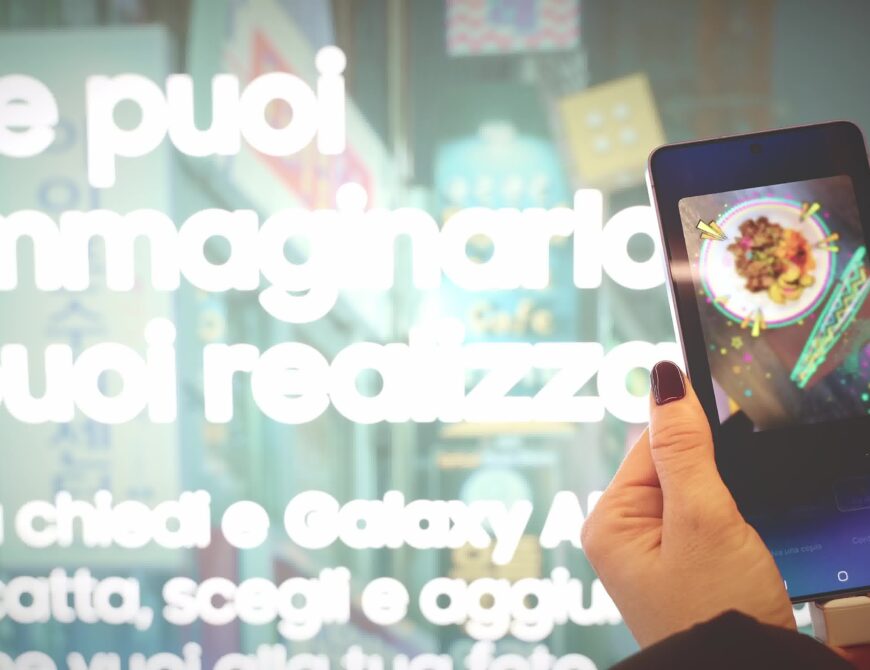
How activation can connect physical experiences, digital channels and social media within one ecosystem
For brands, a live activation is no longer simply a moment in a specific place, designed for the people who happen to be there. When conceived strategically, it can become the center of a much broader communication ecosystem: a space where people experience the brand, content is created and every interaction can continue across digital and social channels.
At UP! Italy, we believe the most effective activations are not isolated events supported by a separate communication campaign. They are integrated platforms in which the live experience, digital touchpoints, creators and social media all contribute to the same narrative.
The Samsung Galaxy S26 K-Culture Roadshow demonstrates how this approach can transform a product launch and training programme into a connected experience capable of engaging different audiences, generating content and extending its impact beyond each individual stop.
One activation, multiple objectives
The challenge was multifaceted.
Samsung wanted to reinforce its position as a leader in mobile innovation, introduce the new Galaxy AI features and increase product knowledge and recommendation among MediaWorld and Unieuro sales staff. At the same time, the project needed to attract consumers, encourage product trial, generate store traffic and build a meaningful connection with Samsung’s Korean heritage.
Rather than treating these as separate communication requirements, the project brought them together under one creative concept: a journey from Seoul to Italy, connecting advanced technology with the traditions, places and contemporary trends of K-culture.
Two travelling experience buses became a direct “public transport line” between the heart of Samsung and Italian retail locations. During the week, the buses operated as immersive training environments for sales staff. At weekends, the same spaces became consumer-facing activations designed to attract attention, encourage participation and facilitate product discovery.
The physical experience therefore became the common foundation for training, engagement, retail activation and communication.
Live moments as content engines
Live experiences naturally generate moments with strong communication potential. People discover something, test a product, react to an unexpected environment and share the experience with others.
However, this potential only becomes valuable when content creation is considered from the beginning.
Inside the K-Culture Roadshow, each area connected a Samsung feature to a recognisable Seoul destination or cultural reference. Gangnam introduced the Privacy Display, Myeong-dong became the setting for Gemini Live, while Bukchon was associated with the Shoot & Create experience.
This structure made complex technological benefits easier to understand, but it also created a visually distinctive and highly shareable environment. Product demonstrations became stories. Training sessions became opportunities for authentic interaction. Consumer participation, challenges and rewards created spontaneous moments that could be captured and redistributed.
The experience was therefore not merely the subject of the content. It was designed to produce it.
This changes the role of activation. Instead of asking how an event can be communicated after it happens, the more strategic question becomes: What moments should the experience generate, and how will those moments live across different channels?
Integration instead of parallel campaigns
Too often, live activation, influencer activity and social communication are developed as parallel workstreams. They may share the same branding, but they do not necessarily reinforce one another.
An integrated ecosystem works differently.
The live experience provides the story, the product proof points and the human reactions. Influencers offer their own interpretation and introduce the activation to relevant communities. Social media distributes highlights, explains key features and allows people who are not physically present to participate in the narrative.
Each touchpoint has a different role, but they all move in the same direction.
For the Samsung roadshow, travel and lifestyle influencers were not an additional layer placed around the activation. Their involvement was a natural extension of a concept built around travel, Korean culture, lifestyle and technological discovery.
Similarly, social content did not need to invent a separate campaign language. It could draw directly from the locations, demonstrations, challenges and interactions created inside the experience.
This alignment creates greater consistency, but it also makes communication more efficient. One central idea can generate multiple formats without becoming fragmented: short-form video, creator content, product demonstrations, behind-the-scenes footage, testimonials and retail communication can all emerge from the same narrative platform.
From experience to amplification
The value of a live activation begins with the people who attend, but it should not end with them.
Across 38 days, the two Samsung buses visited 80 points of sale and shopping centers, trained 452 members of sales staff and engaged 2,197 consumers. Sixty-nine phones were also sold while the activation was on site.
These figures describe the direct impact of the roadshow. Amplification adds another dimension: it allows each physical stop to reach audiences beyond the immediate location and to continue generating value after the bus has moved on.
A successful live moment can become a product tutorial for someone considering a purchase. A participant’s reaction can become social proof. An influencer’s visit can introduce both the product and the experience to an entirely new audience. A piece of content created at one location can support awareness and traffic at the following stops.
In this way, amplification does not simply increase reach. It extends the duration, relevance and commercial potential of the experience.
Designing the ecosystem from the start
For integration to be effective, amplification cannot be treated as a final production phase. It must influence the design of the experience itself.
This means identifying the stories the activation should generate, designing environments that communicate clearly both in person and on screen, and creating interactions that people will genuinely want to capture and share.
It also means considering how different audiences move through the ecosystem. A sales assistant may need detailed training and practical product knowledge. A consumer may need an immediate and entertaining demonstration. An online audience may need a concise visual story that creates curiosity within seconds.
The creative concept must be flexible enough to serve all three without losing its identity.
The Samsung K-Culture Roadshow achieved this by turning technology into a journey. Product features, cultural references, physical environments, staff interaction, influencer participation and social communication all became chapters of the same story.
Beyond the event
The future of activation is not about choosing between physical and digital engagement. It is about designing experiences in which the two strengthen one another.
Live environments provide emotion, participation and authentic human response. Digital channels provide accessibility, continuity and measurable interaction. Social media provides distribution, conversation and cultural relevance.
When these elements are planned together, activation becomes more than an event or a temporary installation. It becomes an integrated brand platform: one capable of educating, entertaining, generating content and moving audiences from discovery to consideration and action.
That is the transition from experience to amplification and it begins by designing every live moment with a life beyond the moment itself.